Octagonal Softbox vs. Beauty Dish vs. Umbrella: Choosing the Right Portrait Modifier
Photographers often buy modifiers because another photographer recommends one, a tutorial labels it “cinematic,” or a trend makes one catchlight recognizable. Professionals begin elsewhere: What kind of light does this portrait need?
An octagonal softbox, beauty dish, and umbrella can all create strong portraits. Each changes beam spread, contrast, shadow transition, catchlight shape, spill, efficiency, and working speed. The correct choice depends on the desired portrait, the person, the environment, and the story—not a universal ranking.
Estimated reading time: 11 minutes
Why the Modifier Matters
A modifier reshapes the distribution of a light source. It may enlarge the apparent emitting area, redirect the beam, add diffusion, reflect light from an interior surface, or restrict spill. Those changes affect how the portrait feels.
Light quality: Defined or gradual transitions influence texture and atmosphere.
Contrast: The modifier and environment determine how much light fills the shadow side.
Shadow transition: Apparent source size and distance control edge softness.
Catchlights: Shape, position, brightness, and size become visible in the eyes.
Spill control: Direction determines whether light reaches the background, floor, lens, or nearby people.
Efficiency: Diffusion, bounce, grids, and interior finish change how much output reaches the subject.
Subject comfort: Flash position, brightness, heat, proximity, and repeated output affect the person’s experience.
Modifier shape alone does not determine softness. A source appears softer as it becomes larger relative to the subject. Move the same modifier closer and it becomes apparently larger, usually creating a more gradual shadow transition. Move it farther away and it becomes apparently smaller, with a more defined transition and more even exposure across depth.
Octagonal Softbox: Soft Direction With Control
An octagonal softbox encloses and diffuses the source while presenting a roughly rounded front surface. Many versions include inner diffusion, outer diffusion, reflective interiors, removable grids, and different depths. The result can be soft and even, but exact character depends on construction and placement.
Advantages
Soft directional light when used close enough to appear large
Excellent feathering across a face, body, or group
Rounded catchlight that can feel visually familiar
Better spill control than an open umbrella
Even illumination with both diffusion layers installed
Grid compatibility for tighter background separation
Limitations
A softbox takes more setup time than an umbrella and loses output through diffusion. Larger versions need stronger stands, more room, and more ballast. A deep or gridded design may be less forgiving if the subject moves outside the beam. The octagonal shape does not guarantee softness when the modifier is small or distant.
Best Portrait Situations
Use an octagonal softbox for professional headshots, branding, actor portraits, controlled environmental work, families that can remain within the beam, and outdoor portraits where spill must be managed. It is a strong general-purpose choice when the face needs gradual transitions without lighting the entire room.
Recommended Distances
Begin with the front surface roughly 0.5–1.5 modifier diameters from the subject. For a 90 cm softbox, that suggests approximately 45–135 cm as an experimental range. Closer placement produces a larger apparent source and faster falloff. Greater distance creates more even exposure across a group but a more defined transition. Keep the modifier outside the composition and adapt for movement, glasses, skin response, and crop.
Beauty Dish: Defined, Sculpted Portrait Light
A beauty dish uses a central deflector to prevent the flash tube from firing directly at the subject. Light spreads across the dish and returns as a broad, comparatively efficient source. Silver, white, depth, diameter, deflector shape, diffusion socks, and grids all change the result.
Advantages
Crisp yet flattering light when placement suits the face
More defined facial structure and texture than a large diffused softbox
Higher contrast and specular presence for polished editorial work
Efficient output compared with heavily diffused modifiers
Distinct round catchlight
Grid and diffusion options for changing spread and transition
Limitations
A beauty dish can emphasize skin texture, shine, makeup inconsistencies, and uneven placement. It covers groups poorly unless used far enough away, which makes it harder. The source becomes unforgiving when the subject moves substantially. A dish and grid also create wind load outdoors and require secure support.
Best Portrait Situations
Choose a beauty dish for beauty, fashion, editorial, music, character portraits, and headshots that benefit from sculpted facial definition. It works well when wardrobe, makeup, skin treatment, expression, and retouching expectations support a more defined light.
Recommended Distances
Start around one to two dish diameters from the face, slightly above eye level and offset according to the desired shadow pattern. A 55 cm dish might begin around 55–110 cm away. Move closer for a larger apparent source and faster falloff; move farther for more even coverage and a crisper transition. Add a diffusion sock when the bare dish is too specular, not by habit.
Umbrella Lighting: Fast, Broad, and Forgiving
Umbrellas open quickly, weigh little, and distribute light broadly. They are useful when coverage and speed matter more than precise spill control. The two common types behave differently.
Shoot-Through Umbrella
The flash points through translucent fabric toward the subject. Some light passes forward while some scatters backward and sideways. It can create a broad apparent source at close range, but it often illuminates walls, ceilings, backgrounds, and nearby people. Place it close when possible, with the shaft and stand outside the frame.
Reflective Umbrella
The flash points away from the subject into a white or silver interior, and the reflected beam returns toward the person. A white interior usually creates a gentler result; silver is generally more efficient and specular. A backing cover can reduce transmitted spill. Depth and focus position change beam spread.
Advantages
Very fast setup and breakdown
Lightweight and compact for transport
Broad light spread for groups and active subjects
Forgiving coverage when people shift position
Accessible entry point for off-camera flash practice
Efficient reflective options for limited flash output
Limitations
Umbrellas offer less spill control than enclosed softboxes. They can brighten the background unintentionally, reduce room contrast through bounce, and reflect in glass or polished surfaces. Their open shape catches wind easily. Outdoors, even a mild gust can move a stand abruptly.
Best Portrait Situations
Choose an umbrella for family groups, teams, events, quick office portraits, home sessions, and simple studio coverage. Use one indoors when broad illumination is welcome and the surrounding surfaces do not create unwanted color or fill.
Side-by-Side Portrait Modifier Comparison
Decision — Octagonal softbox — Beauty dish — Umbrella
• Light softness — Soft when large and close — Moderate; defined unless diffused and close — Soft when large and close, with broad environmental fill
• Contrast — Controlled, moderate — Higher and more sculpted — Often lower indoors because spill bounces around the room
• Shadow transition — Gradual with close placement — More defined — Broad and gradual when close
• Catchlights — Rounded polygon — Circular — Umbrella ribs may be visible
• Background spill — Low to moderate; lower with grid — Moderate; lower with grid — High, especially shoot-through
• Feathering ability — Excellent and predictable — Useful but narrower — Possible, though broad spill remains
• Portability — Moderate — Moderate — Excellent
• Setup speed — Moderate — Moderate — Fastest
• Wind resistance — Poor; large sail area — Poor to moderate — Poorest
• Outdoor use — Strong control with safe support — Defined, efficient option with safe support — Use only in controlled wind with active support
• Indoor use — Excellent general control — Excellent for defined portraits — Excellent for broad fast coverage
• Group portraits — Good with suitable size and distance — Limited — Excellent
• Environmental portraits — Strong control of subject and background — Good for stylized separation — Can illuminate too much environment
• Headshots — Excellent — Excellent when texture suits the goal — Good for fast, open coverage
• Fashion — Soft editorial and full-length options — Classic defined option — Useful for broad catalog coverage
• Branding — Controlled, versatile default — Strong for bold visual identity — Efficient for teams and active scenes
The table describes common tendencies, not fixed outcomes. Modifier size, depth, lining, diffusion, grid, flash head, distance, room, walls, and subject placement can make two products with the same label behave differently.
Which Modifier Should You Choose?
Need maximum softness with directional control? Choose an octagonal softbox.
Need sculpted facial definition and editorial contrast? Choose a beauty dish.
Need quick, broad, forgiving coverage? Choose an umbrella.
If the answer is unclear, identify the hardest constraint. A small office may require spill control. A large family may require coverage. A beauty portrait may require defined texture and highlights. The desired frame should eliminate options before preference enters the decision.
Real Shooting Examples
Professional Headshot: Octagonal Softbox
Place a 65–90 cm softbox close and slightly above the face, then feather it across the subject. The gradual transition supports skin and expression while the enclosed modifier keeps light off a neutral backdrop. Add a grid only if the background or lens receives unwanted spill.
Beauty Portrait: Beauty Dish
Position the dish near the camera axis or slightly to one side according to facial structure. Use the bare dish for defined texture or add diffusion when highlights become too sharp. Watch eye sockets, nose shadow, chin angle, and skin preparation.
Family Portrait: Umbrella
Use a large reflective umbrella far enough away to keep exposure consistent across the group while maintaining sufficient apparent size. Feather across the nearest person, stop down for depth of field, and keep everyone within the beam. Broad spill may help fill an indoor room.
Outdoor Branding Portrait: Octagonal Softbox
A gridded octagonal softbox provides directional facial light while preserving environmental contrast. Choose size according to wind, power, and crop. Use a weighted stand and assistant; lower the modifier immediately when conditions become unsafe.
Editorial Portrait: Beauty Dish
A beauty dish can reveal wardrobe structure, facial planes, and deliberate makeup. Place it according to the narrative rather than a standard diagram. Add a rim or background source only if it solves a separate visual problem.
Modifier Size: 45 cm to 120 cm
Size changes softness only in relationship to distance. A 45 cm modifier very close to the face may appear larger than a 120 cm modifier placed across a room. Compare the modifier’s apparent diameter from the subject’s position.
45 cm: Compact, controlled, and defined; useful for tight headshots, rim light, or constrained spaces.
65 cm: Portable one-person option with a useful balance of softness and control.
90 cm: Versatile for headshots, half-length portraits, branding, and small groups.
120 cm: Broad source for full-length work and groups, but requires room, output, support, and careful wind management.
Close placement increases apparent size and creates faster exposure falloff from near to far. Farther placement reduces apparent size but makes exposure more even across a group. Choose the tradeoff according to subject depth, movement, and environment.
Feathering a Portrait Modifier
Feathering means aiming the modifier so the subject receives the edge of the beam rather than its brightest center. With many softboxes, this produces a more gradual, controlled facial exposure than pointing the center directly at the face.
The center may contain a hotspot or a more direct path from the flash tube. Rotating the source across the subject moves that center away while the edge creates the working light. Feathering can also keep illumination off the background, reduce spill onto a nearby wall, balance two people at different positions, and preserve shadow on the far side of the face.
Feather from the camera position and make a test frame after every angle change. Watch the near cheek, far eye, clothing, hands, and background. Edge light is not automatically softer; the result depends on the modifier’s internal construction and beam pattern.
Modifier Choice by Environment
Studio
All three modifiers are viable. Choose the softbox for control, dish for definition, or umbrella for rapid groups and catalog coverage. Flags and background distance expand control.
Office
A 65–90 cm softbox often contains spill in a small room. An umbrella is faster for a team but may bounce color from walls. A beauty dish suits a defined executive portrait when there is adequate working space.
Coffee Shop
Use a compact gridded softbox to protect customers, windows, and practical lights from spill. Keep stands out of paths and obtain location permission. An umbrella may illuminate the entire room unintentionally.
Forest and Open Shade
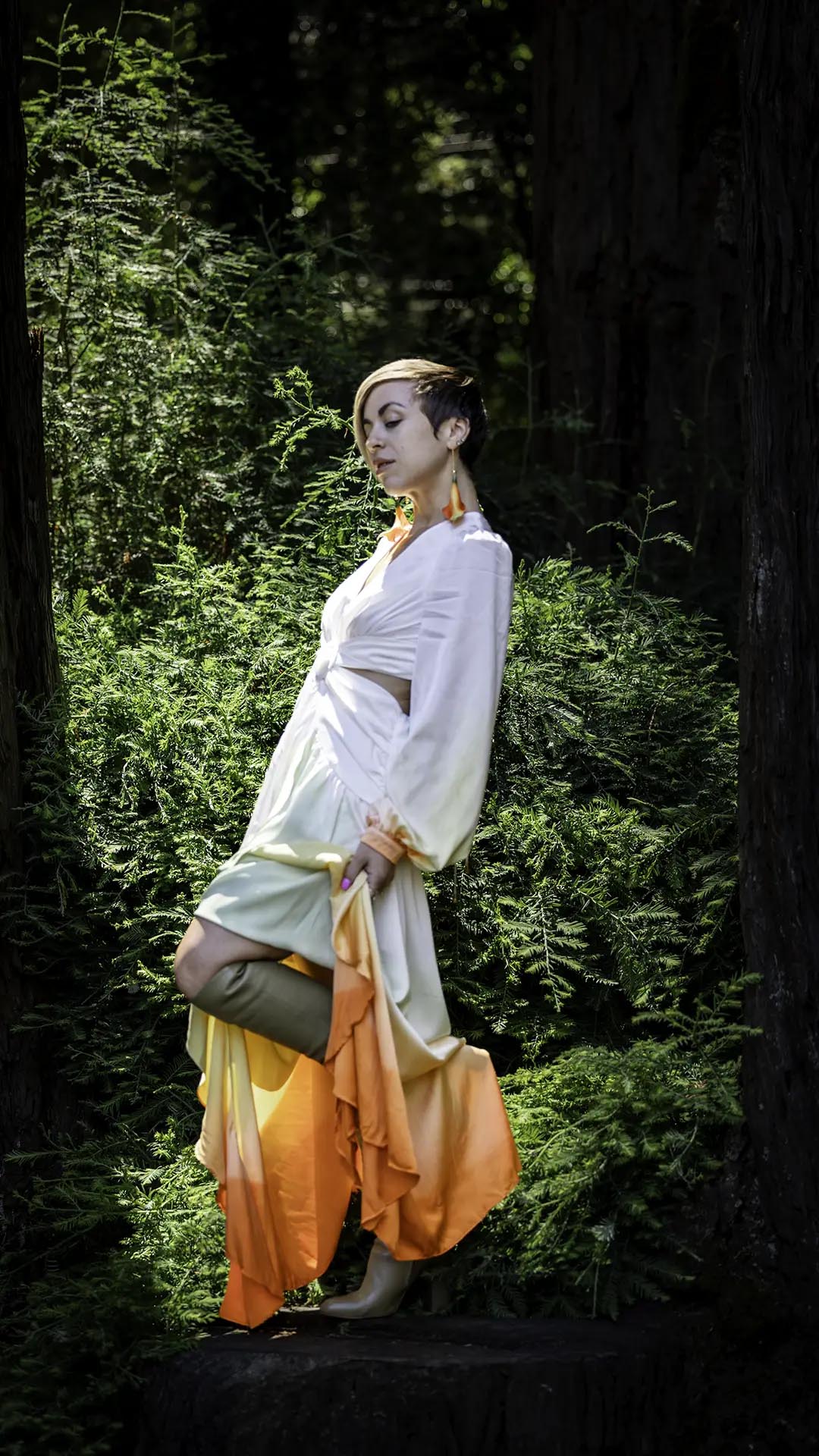
A softbox can create clean direction while retaining dark foliage and atmosphere. A beauty dish gives more defined light with less diffusion loss. An umbrella is workable only with controlled air and active support.
Midday Sun
Choose the most efficient modifier that still produces the required quality. A beauty dish or reflector-style source preserves more output than a heavily diffused large softbox. Reposition the subject or use shade before assuming power alone will solve the scene.
Windy Conditions
Do not leave any modifier unattended. Umbrellas and large softboxes can become sails; beauty dishes also catch wind. Reduce size, use a handheld light with a trained assistant, move to shelter, or postpone the setup. Ballast does not make an unsafe wind condition safe.
For power and portability decisions, continue with How to Choose the Right Godox Flash.
Common Modifier Mistakes
Using the largest modifier for every portrait: Room, power, subject depth, and wind may favor a smaller source.
Pointing the modifier directly at the face: The center hotspot may create flatter, less controlled illumination.
Ignoring feathering: Spill reaches the background and removes intentional shadow.
Choosing a beauty dish for large groups: Coverage and exposure consistency become difficult.
Using umbrellas outdoors in wind: The setup can become unstable with little warning.
Adding diffusion without purpose: Output drops and desired contrast may disappear.
Choosing by catchlight alone: The entire face, environment, mood, and subject experience matter more.
Frequently Asked Questions
Is a beauty dish softer than a softbox?
Not inherently. Softness depends on apparent source size from the subject’s position. A large close softbox is usually softer than a smaller distant beauty dish, while distance and diffusion can alter either result.
Should beginners buy a softbox first?
Often, because a medium softbox offers useful direction, diffusion, feathering, and spill control for many portraits. An umbrella may be a faster and less expensive first modifier when groups or portability dominate.
Can umbrellas produce professional portraits?
Yes. Professional quality depends on placement, exposure, direction, environment, expression, and control. Umbrellas are effective when broad coverage and speed support the assignment.
Which modifier works best outdoors?
A gridded softbox or beauty dish usually offers more control than an umbrella, but every modifier creates wind load. Use a rated stand, ballast, an assistant, and a plan to lower equipment immediately.
Does modifier size matter more than shape?
Apparent size and distance strongly affect softness, while shape, depth, interior finish, diffusion, and beam control affect spread, efficiency, catchlights, and transition character. Both matter.
Should I use a grid on a portrait modifier?
Use a grid when spill reaches the background, lens, floor, or another subject. A grid narrows spread; it does not automatically make the source softer.
What size softbox is best for one person?
A 65–90 cm modifier is a versatile starting range for headshots and half-length portraits. A 120 cm source can cover more area but needs more room, power, support, and wind control.
What is the difference between a shoot-through and reflective umbrella?
A shoot-through umbrella places the subject beyond the fabric and allows broad spill. A reflective umbrella points away from the subject and returns light from its interior, often with a more defined direction.
Why feather a softbox instead of pointing it at the face?
Feathering places the subject in the edge of the beam, which can reduce a central hotspot, control spill, smooth coverage across a group, or create a more gradual background relationship.
Is a beauty dish only for beauty photography?
No. It can create fashion, editorial, character, music, and headshot portraits when its defined transition and specular quality fit the face, skin, wardrobe, and story.
Does adding diffusion always improve portrait light?
No. Diffusion can smooth the beam and enlarge the apparent emitting surface, but it reduces efficiency and may remove the contrast or texture the portrait needs.
Choose the Light Quality the Portrait Needs
Choose the modifier according to the light quality the portrait needs—not because one shape is universally better. An octagonal softbox offers soft direction and control. A beauty dish creates defined structure and editorial presence. An umbrella provides fast, broad, forgiving coverage.
Think about mood, subject, movement, environment, spill, support, and story before opening a modifier. Then refine apparent size, distance, angle, diffusion, and feathering until the light belongs to the portrait.
Continue with Rim Light vs. Background Light, Frame Composition, f/1.2 vs. f/11, and 70–200mm vs. 50mm. See how these choices support Portland portrait photography and personal branding photography. Browse the Journal, learn about Shayne Blaylock, or contact Shayne to book a portrait session or ask about one-to-one photography mentoring.