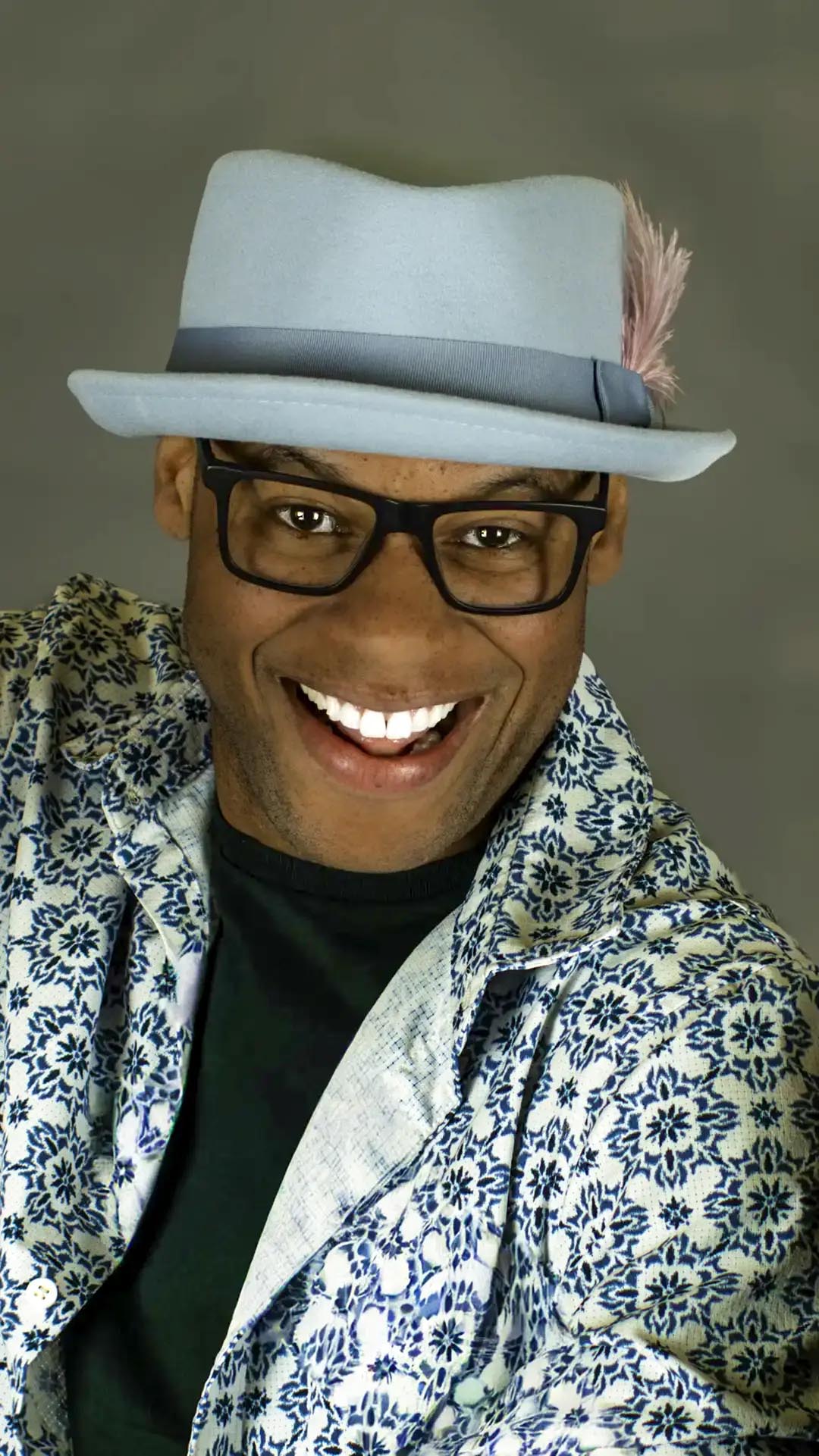
f/1.2 vs. f/11: How Aperture Changes the Story of a Portrait
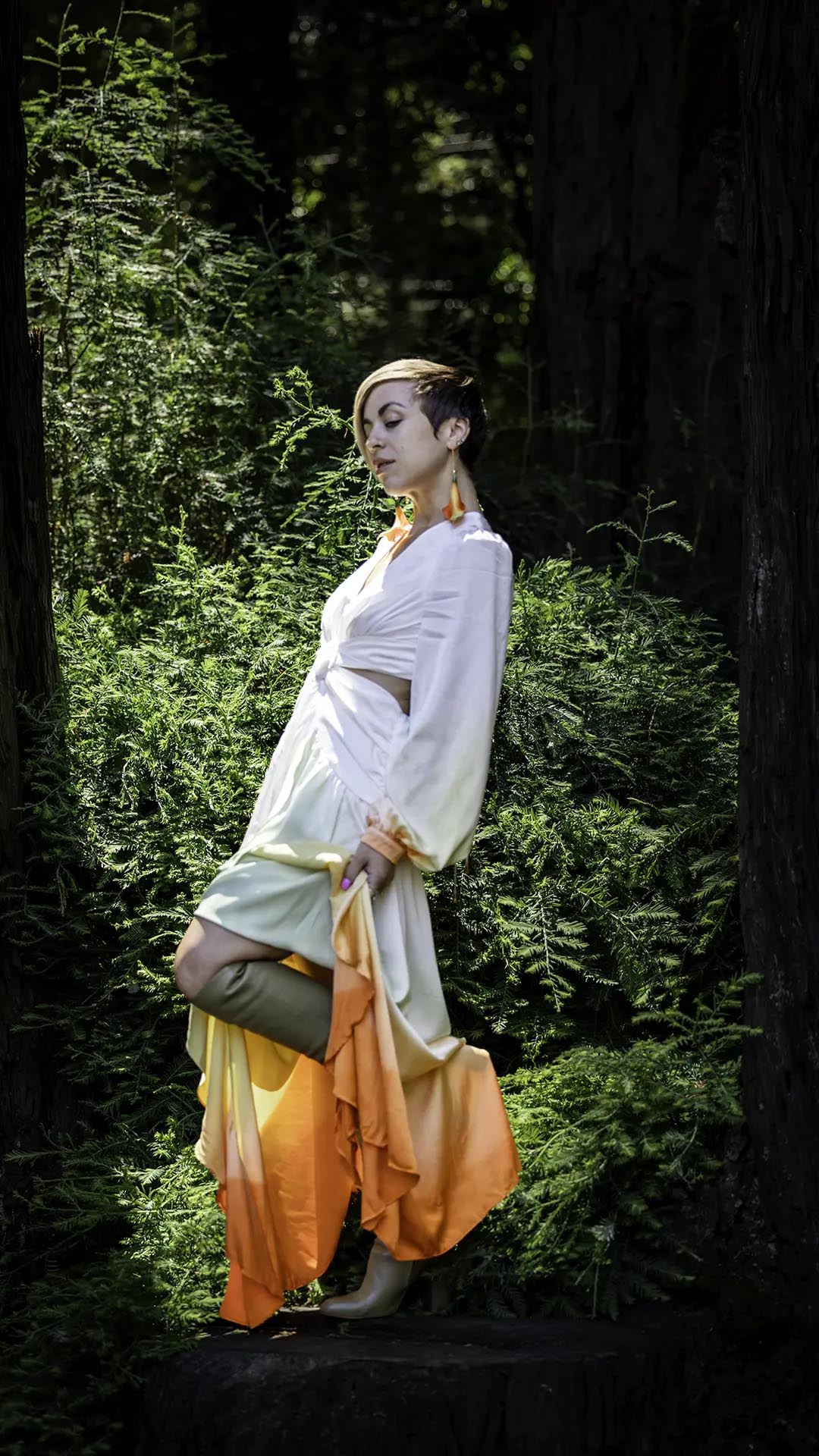
Aperture influences far more than exposure. It controls depth of field, focus tolerance, subject separation, environmental storytelling, and the emotional weight of a portrait. At f/1.2, a face can emerge from a field of soft color. At f/11, a person can remain connected to the architecture, tools, and location around them.
Professionals do not choose an aperture because one number is inherently superior. They choose according to the story the frame needs to tell. The central question is simple: How much of this scene deserves to remain in focus?
Estimated reading time: 9 minutes
Understanding Aperture
Aperture is the adjustable opening inside a lens. Along with shutter speed and ISO, it affects exposure. A lower f-number such as f/1.2 describes a wider opening; a higher number such as f/11 describes a narrower opening. Each full stop changes the amount of light by a factor of two. Moving from f/1.4 to f/2 halves the light, while moving from f/2 to f/1.4 doubles it.
Aperture also changes depth of field: the range in front of and behind the focus distance that appears acceptably sharp. A wider aperture generally creates a shallower range. A smaller aperture generally creates a deeper range. Aperture is only one factor. Focal length, camera-to-subject distance, focus distance, sensor format, output size, and viewing distance also change the result.
That is why aperture is a creative decision rather than a technical setting selected in isolation. It determines whether the viewer studies an eye, reads a workspace, notices a crowd, or feels the distance between a person and the world around them.
Photographing at f/1.2
At f/1.2, depth of field can become extremely shallow, especially at close portrait distances. The point of focus may be sharp while eyelashes, ears, hair, and background details fall away quickly. That transition produces strong subject separation and can turn lights, foliage, or architecture into broad shapes rather than literal information.
Advantages
Strong separation when the background is distracting or visually dense
Soft background rendering that can reduce literal detail into color and atmosphere
More light reaching the sensor, which can support lower ISO or faster shutter speeds
Selective focus that emphasizes an eye, gesture, or small emotional detail
A cinematic or intimate feeling when shallow focus fits the scene
Challenges
Focus precision is demanding. If the subject leans, turns, or breathes between focus acquisition and exposure, the intended eye may leave the sharp zone. Group portraits become inconsistent because faces rarely occupy one plane. Some lenses also show lower contrast, color fringing, vignette, or reduced corner performance at maximum aperture.
Best Use Cases
Use f/1.2 for a close emotional portrait, lifestyle detail, low-light scene, editorial frame, or location where the background contributes mood but not useful information. It can be effective for a single person with a steady pose and deliberate eye placement.
Recommended options include 50mm f/1.2 and 85mm f/1.2 lenses for selective portraiture. A wider fast lens can retain more environment, but edge distortion and near-far scale require attention. The lens should be chosen for camera position and story—not for the maximum aperture printed on the barrel.
Common f/1.2 Mistakes
The most common mistake is shooting wide open by default. Blur does not automatically create meaning. Other problems include focusing on eyelashes instead of the iris, losing the far eye during a turned pose, placing a bright shape behind the head, and assuming autofocus removes the need to inspect critical frames. Take short controlled sequences, use reliable eye detection when appropriate, and magnify representative files during transitions.
Photographing at f/11
At f/11, the narrower opening produces greater depth of field than f/1.2 at the same focal length, distance, and focus point. The environment remains more legible, which can turn the portrait from a study of appearance into a description of person and place.
Advantages
More readable foreground and background information
Greater focus tolerance for groups and subjects moving across modest depth
Clear architecture, workspace, products, tools, or landscape context
Strong graphic relationships between the person and surrounding lines or shapes
Easier consistency when several people need comparable sharpness
Challenges
f/11 admits much less light than f/1.2. In dim conditions, the photographer may need a slower shutter speed, higher ISO, tripod, or additional light. Small apertures can reveal every background distraction, so composition must be more disciplined. Diffraction may also soften fine detail, depending on the camera, output size, and viewing conditions.
Best Use Cases and Situations
Choose f/11 for environmental storytelling, architecture, travel portraits, business owners at work, and groups arranged at different depths. It is especially useful when the location contains evidence the viewer must understand: the scale of a kitchen, the arrangement of a studio, the audience around a musician, or the geometry of a building.
Most standard and professional lenses can produce strong results at f/11. The recommended situation matters more than a special lens: sufficient light, a meaningful environment, controlled frame edges, and a shutter speed that protects subject movement.
f/1.2 vs. f/11: Side-by-Side Comparison
Decision — f/1.2 — f/11
• Depth of field — Extremely shallow at close distances — Deep relative to f/1.2
• Subject isolation — Strong optical separation — Separation relies more on light, color, distance, and composition
• Background detail — Mostly abstract at many portrait distances — Often recognizable and story-bearing
• Storytelling — Emphasizes emotion, face, or detail — Connects person, place, and activity
• Focus precision — Very demanding — More forgiving, though not unlimited
• Flash requirements — Low power may be sufficient; bright ambient can complicate synchronization — More flash power is commonly required
• Low-light performance — Admits substantially more light — May require higher ISO, slower shutter, or added light
• Environmental context — Suggested through shape and color — Described through recognizable detail
• Creative effect — Intimate, selective, atmospheric — Layered, descriptive, graphic
These are tendencies, not guarantees. A distant subject at f/1.2 can have considerable depth of field, while a close subject at f/11 can still leave a remote background soft. Camera position and distance remain part of every aperture decision.
Storytelling Through Aperture
Before changing the dial, ask: How much of this scene deserves to remain in focus? If the portrait is subject-driven, the face, expression, or gesture may carry nearly all the meaning. A wide aperture can remove literal background information and let color, light, and atmosphere support the person quietly.
If the portrait is environment-driven, the location must remain readable. A chef without the kitchen, a painter without the studio, or an athlete without the training space may lose essential context. A moderate or small aperture lets objects, architecture, and spatial relationships participate in the story.
Narrative choice does not require an extreme. f/2.8, f/4, f/5.6, and f/8 offer useful compromises. The goal is not to prove that the lens can shoot at f/1.2 or that every object can be sharp at f/11. The goal is to include the visual information the viewer needs and suppress what competes with it.
Which Aperture Should You Choose?
Choose f/1.2 When
The background is distracting but cannot be changed physically
A quiet expression or small detail should dominate the frame
Low light requires a wider opening while movement must remain sharp
Lifestyle or editorial work benefits from selective, atmospheric focus
The subject is alone and focus can be controlled carefully
Choose f/11 When
The location provides essential narrative evidence
A business, product, process, or workspace must be understandable
An environmental portrait needs several readable planes
A group occupies more than one focus distance
Travel photography depends on architecture, landscape, or cultural context
If neither extreme supports the frame, choose a middle aperture. Make the decision by looking through the photograph, not by defending a favorite setting.
Lens Sharpness and Diffraction
Many lenses deliver strong central and edge performance around f/4 to f/8, but the exact optimum varies by lens, focal length, focus distance, sensor, and output. Stopping down can reduce wide-open aberrations and improve consistency across the frame. Past a certain point, diffraction spreads fine detail across neighboring pixels and gradually lowers crispness. On many modern cameras, some diffraction may be visible by f/11, especially under close inspection.
Maximum sharpness is not always the most compelling photograph. A technically softer f/1.2 portrait may communicate vulnerability or isolation more effectively. An f/11 portrait with slightly less pixel-level crispness may be stronger because the workplace completes the subject’s story. Image quality includes timing, expression, light, color, depth, and meaning—not resolution alone.
Using Off-Camera Flash at Different Apertures
Aperture directly affects how much flash exposure reaches the sensor. At f/1.2, a flash can work at low power, recycle quickly, and deliver long sequences with less battery demand. Outdoors, however, the ambient exposure may require a shutter speed above normal flash synchronization. High-speed sync can preserve the wide aperture, but it reduces effective flash output and may increase heat and recycle demands.
A neutral-density filter can reduce ambient light and allow f/1.2 near the camera’s normal sync speed. Test the filter for color shift, flare, polarization artifacts, and autofocus behavior. Sometimes the cleaner solution is to choose a slightly smaller aperture rather than add glass and complexity.
At f/11, the flash usually needs much more power at the same ISO and distance. That can slow recycle time and limit the distance a modifier can be placed from the subject. Move the light closer, use a more efficient modifier, raise ISO within acceptable limits, combine heads safely, or select a brighter unit. Establish the ambient exposure first, then add flash to solve a named problem such as facial direction, contrast, or subject separation.
For a broader framework, read the complete guide to cinematic portrait lighting.
Aperture for Environmental Portraits
Moderate to smaller apertures often work well when the environment contributes meaning. An artist in a studio may need readable brushes, canvases, and working surfaces. A chef in a kitchen benefits from recognizable tools and spatial order. A business owner at a workplace can be connected to products, staff, or architecture. A musician on stage may need instruments and practical lights to establish performance. An athlete in a training environment gains context from equipment, markings, and physical space.
Not every background object deserves equal emphasis. Use distance, light, color, perspective, and composition to create hierarchy even at f/8 or f/11. Place the face against a quieter tonal area, keep bright objects away from the frame edge, and separate overlapping shapes. The environment should explain the person without overwhelming them.
See how this balance supports Portland portrait photography, personal branding photography, and professional headshots.
Practical Aperture Exercise
Photograph the same subject from the same camera position at:
f/1.2
f/2.8
f/5.6
f/8
f/11
Keep framing and focus distance consistent. Adjust shutter speed, ISO, flash power, or ambient conditions so exposure remains comparable. If the lens does not open to f/1.2, use its widest aperture and record that value.
Review the five files at full size and as small thumbnails. Note which facial features are sharp, when the background becomes recognizable, which distractions appear, and how the emotional emphasis changes. Then repeat the assignment with the subject farther from the camera and farther from the background. The comparison will show that aperture, distance, and focal length work together.
Common Aperture Mistakes
Using f/1.2 for every portrait: A signature look becomes a limitation when it removes necessary context.
Stopping down without purpose: More depth is useful only when the added detail contributes to the frame.
Ignoring background distractions: f/11 reveals problems, while f/1.2 may turn bright distractions into larger soft shapes.
Missing focus at wide apertures: Confirm the intended eye and allow for subject movement and face angle.
Assuming blur always improves a portrait: Blur can simplify, but it can also erase identity, location, and story.
Treating f/11 as universal sharpness: Motion, focus placement, diffraction, and lens behavior still matter.
Frequently Asked Questions
Is f/1.2 always better for portraits?
No. f/1.2 can create strong separation and selective focus, but it may remove environmental information the portrait needs. The better aperture is the one that supports the intended story and delivers enough focus for the subject.
Is f/11 too small for portrait photography?
No. f/11 is useful for groups, environmental portraits, architecture, and scenes where several planes must remain readable. It may require more light, a slower shutter speed, or a higher ISO.
What aperture do professional portrait photographers use most?
There is no universal professional setting. Many portraits fall between f/2.8 and f/8 because that range balances subject separation, focus tolerance, lens performance, and environmental detail.
What aperture creates the best bokeh?
A wide aperture can increase blur, but bokeh also depends on lens design, focal length, subject distance, background distance, and the shape and brightness of background details.
Does aperture affect flash power?
Yes. Closing from f/1.2 to f/11 requires substantially more flash exposure if ISO and flash-to-subject distance remain unchanged. That can increase power demand and slow recycle time.
What aperture is best for environmental portraits?
Apertures from roughly f/4 to f/11 often work well because they preserve context, but the correct choice depends on camera distance, focal length, subject-background spacing, and how much detail the story needs.
Should beginners shoot portraits wide open?
Beginners should practice wide open, but not use it automatically. Photograph the same scene at several apertures and examine eye focus, background meaning, and consistency across a sequence.
Can both eyes be sharp at f/1.2?
They can be when the eyes are nearly parallel to the focus plane and the camera is not too close. If the face turns, depth of field may be too narrow to keep both eyes equally sharp.
Does f/11 make everything sharp?
No. Depth of field increases, but it is never literally infinite. Focus distance, focal length, sensor format, subject distance, motion, lens quality, and diffraction still affect apparent sharpness.
When should I use a neutral-density filter for portraits?
Use an ND filter when bright ambient light forces a smaller aperture or faster shutter than the creative plan allows. Check for color shifts, reflections, and autofocus changes before relying on it.
Does aperture change perspective?
Aperture does not directly change perspective. Camera position controls perspective. Aperture changes depth of field and exposure, which can make the spatial relationship feel different.
Choose the Aperture That Supports the Story
Aperture is a storytelling tool, not merely a camera setting. f/1.2 can isolate a glance, soften a distracting place, and create intimacy. f/11 can preserve the relationships between a person, their work, and the environment around them. Neither is automatically more professional.
Choose the aperture that keeps the necessary information and removes what competes. Practice across the full range, judge the entire frame, and let narrative—not maximum background blur—lead the decision.
Browse more photography education in the Journal, learn about Shayne Blaylock, or contact Shayne to book a portrait session or ask about one-to-one photography mentoring.