70–200mm vs. 50mm: Which Lens Creates Better Portraits?
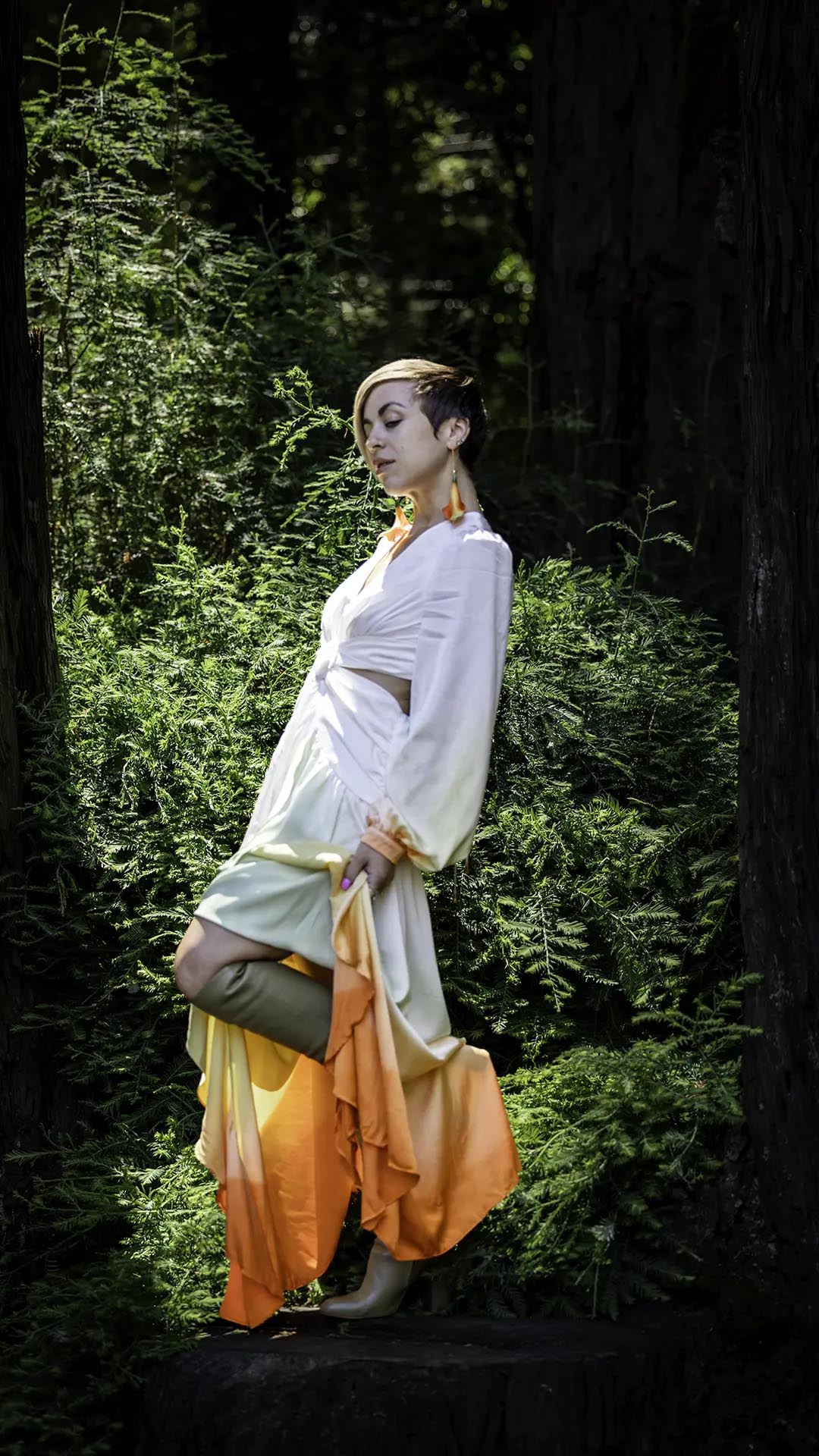
Lens choice changes far more than framing. A 50mm prime may place the photographer close enough for quiet conversation while retaining a meaningful room, street, or studio. A 70–200mm zoom may move the photographer across the space, narrow the background, and make distant shapes appear larger behind the subject.
Those differences affect perspective, communication, subject comfort, background compression, light placement, and storytelling. The goal is not to declare one lens better. It is to choose the tool—and camera position—that supports the portrait.
Estimated reading time: 11 minutes
Understanding Perspective
Perspective describes the apparent size and spatial relationship of objects viewed from a particular position. In photography, perspective comes from camera position. If a 50mm and a 200mm lens make photographs from exactly the same position, the spatial relationships remain the same. The 200mm image records a narrower field of view; cropping the 50mm frame to match would show the same perspective, ignoring resolution and optical differences.
Portrait comparisons usually move the camera to keep the subject the same size in both frames. With a 50mm lens, the photographer stands closer. With a 200mm lens, the photographer moves much farther away. That change in working distance changes perspective. Near facial features appear less prominent relative to farther features, and distant background objects appear larger relative to the subject.
This is why telephoto lenses appear to compress backgrounds. The lens makes the narrower framing practical, but distance creates the perspective relationship. Focal length, field of view, framing, and camera position work together in real use.
Portrait Photography With a 50mm Prime
A 50mm lens on a full-frame camera provides a moderately narrow field of view without requiring the photographer to move far from the subject. On a smaller sensor, the field of view becomes narrower, so the experience differs. The useful quality is not a universal claim of “natural vision,” but a flexible relationship between person, camera, and environment.
Advantages of the 50mm
Environmental storytelling: The frame can show a person with a workspace, home, city street, landscape, or other relevant context.
Easy communication: A conversational working distance makes subtle direction and feedback easier.
Mobility: Many 50mm primes are smaller and lighter than professional telephoto zooms.
Low-light options: Fast versions commonly offer apertures such as f/1.8, f/1.4, or f/1.2.
Lower entry cost: Basic 50mm primes are often among the most accessible lenses in a camera system.
Direct physical perspective: Moving through the location encourages active composition instead of zooming from one mark.
Limitations of the 50mm
A tight headshot may bring the camera too close, exaggerating the relative size of the nose, forehead, or nearest cheek. More environment enters the frame, which can expose clutter, bright distractions, and weak edge relationships. The prime focal length also requires physical movement to change framing; that may be impossible beside traffic, against a wall, at an event, or during a fast production.
Best Situations for the 50mm
Choose 50mm for environmental portraits, branding sessions, small groups, interiors, documentary coverage, lifestyle work, and situations where conversation matters. It is especially effective when the location contains meaningful evidence and the photographer needs to remain physically present with the subject.
Portrait Photography With a 70–200mm Zoom
A 70–200mm lens covers short to long telephoto fields of view in one tool. The range allows tight framing without approaching the subject and makes it possible to adjust composition quickly when camera movement is restricted.
Advantages of the 70–200mm
Compressed-looking backgrounds: Greater working distance makes distant architecture, foliage, lights, or landscape appear larger relative to the subject.
Subject separation: Narrow framing, focal length, aperture, and subject-background distance can simplify a busy place.
Calm facial proportions: The longer working distance used for matched headshot framing reduces near-far exaggeration.
Clean backgrounds: A narrow angle of view selects a small portion of the environment.
Flexible framing: The zoom moves quickly between full-length, three-quarter, and tighter portraits when distance allows.
Candid observation: The photographer can work without occupying the subject’s immediate space.
Limitations of the 70–200mm
The lens is larger, heavier, and usually more expensive than a basic 50mm prime. It needs significant working space, making it difficult indoors, in crowded streets, or against physical boundaries. Distance can weaken conversation and subtle direction. A narrow angle of view may erase useful environmental context, and a heavy lens can affect stability or fatigue during a long session.
Best Situations for the 70–200mm
Choose it for outdoor portraits, events, compressed city backgrounds, performances, unobtrusive candid coverage, and assignments where framing must change without moving through restricted space. It is also useful for headshots when the room provides enough distance and for portraits where distant lights or landscape should become a strong graphic layer.
70–200mm vs. 50mm: Side-by-Side Comparison
Decision — 50mm prime — 70–200mm zoom
• Perspective — Closer camera position for matched framing; more near-far emphasis — Farther position for matched framing; calmer near-far proportions
• Compression — Background appears more separated spatially — Distant background appears larger and closer to the subject
• Background blur — Can be substantial with a wide aperture and sufficient background distance — Strong isolation possible through focal length, framing, distance, and aperture
• Subject isolation — Relies more on composition, light, color, aperture, and spacing — Narrow field of view makes background selection easier
• Working distance — Close to moderate — Moderate to long
• Communication — Direct conversation is easy — May require louder direction, gestures, or an assistant
• Flexibility — One field of view; framing changes by moving — Rapid framing changes across the zoom range
• Weight — Usually smaller and lighter — Usually larger and heavier
• Cost — Entry options are often inexpensive — Professional versions are generally more expensive
• Environmental storytelling — Shows broader context and relationships — Selects specific context and compresses spatial layers
Specifications vary by system and lens version. Evaluate the actual tool for autofocus, minimum focus distance, aperture, stabilization, handling, and weight rather than assuming every 50mm or 70–200mm behaves identically.
Telephoto Compression Explained
Imagine a subject standing ten feet in front of a building. With a 50mm lens, the photographer moves closer to fill the frame. From that position, the subject occupies a much larger visual angle than the distant building. With a 200mm lens, the photographer moves farther away to preserve the same subject size. From farther back, the relative difference between the camera-to-subject and camera-to-building distances is smaller, so the building appears larger behind the subject.
The longer lens records the tighter field of view required from that distant position. This pairing is what photographers call telephoto compression. The perspective change comes from the move, while the lens provides useful framing.
Compression can simplify a busy background by selecting a small, distant area—one patch of foliage, one architectural plane, or several out-of-focus lights. Move laterally and vertically before settling. A narrow view magnifies the importance of every selected shape, tangent, and highlight.
Environmental Portraits: Showing or Selecting Place
At 50mm, the photographer can show how a person relates to a room or landscape. An artist can appear among canvases, a chef within a kitchen, or a business owner beside a team and products. Near and far objects retain a more open spatial relationship. The environment reads as a place the viewer might enter.
At 70–200mm, the photographer selects portions of that same place. A tool, doorway, sign, or distant structure can become a concentrated layer behind the subject. The result may feel more graphic and less descriptive. It still tells an environmental story, but through selection rather than breadth.
Neither approach is automatically more cinematic. A 50mm can create intimacy through proximity and context. A 200mm can create emotional distance, observation, or density. Decide whether the viewer needs to understand the full environment or feel a carefully isolated part of it.
For more ways to organize the setting, read Frame Composition: 15 Environmental Methods for Better Portrait Photography.
Working Distance and Subject Interaction
Working distance changes the human exchange. With a 50mm lens, the camera is often close enough for normal speech. Direction can be quiet and responsive. Small changes in expression, breath, hand position, and posture are easy to notice. That proximity may help someone feel accompanied, although another person may prefer more space.
With a 70–200mm, distance can reduce the pressure of the camera and allow candid transitions. It can also make coaching feel remote. Give clear direction before stepping back, establish simple gesture cues, and return to conversational distance when the subject needs reassurance or refinement. Never let the lens become a barrier to connection.
Comfort depends on the person and assignment. A performer may ignore a distant camera easily. A first-time portrait client may respond better when the photographer remains nearby. Respect communication access, mobility, hearing, visual cues, privacy, and the physical safety of the location when choosing distance.
Lighting Considerations
Lens choice affects the physical lighting plan even when it does not change light quality directly. At 50mm, a broader view can reveal stands, flags, modifiers, and reflections near the frame edge. The photographer may work close to the key, requiring clear paths around equipment. A large modifier can still be placed close for softness, but its stand and boom need careful composition.
With a 70–200mm, the narrow view may make it easier to keep equipment outside the frame. Greater camera distance also changes communication with an assistant and makes small subject movements appear less dramatic in framing. Long-lens portraits often use a distant background, so a background light may be impractical; ambient architecture, foliage, or practical lights may provide the visual layer instead.
Rim lighting requires attention with either lens. A telephoto view can isolate the edge cleanly, but the rear source must remain outside the lens angle to prevent flare. At 50mm, the wider view makes flags and exact source placement more visible. Build the composition first, then solve separation using the fewest lights necessary. Continue with Rim Light vs. Background Light for a complete decision framework.
Aperture changes both lens options. A fast 50mm can isolate at close distances, while a 70–200mm can create separation even at moderate apertures through framing and background distance. Compare those choices in f/1.2 vs. f/11: How Aperture Changes the Story of a Portrait.
Real Shooting Examples
Family Portraits: Start With 50mm
A 50mm is often practical for communication, groups, and moderate spaces. Stop down enough to cover the arrangement and watch edge distortion. Use the 70–200mm when there is substantial outdoor distance and the group needs a selected, compressed background.
Executive Headshots: Choose by Room and Background
Use 70–135mm within the zoom range when the room allows enough distance for calm proportions and consistent framing. Choose 50mm when the portrait must include office context or space is restricted. Avoid moving so close that facial perspective becomes distracting.
Branding Photography: Often 50mm
Branding images frequently need workspace, process, products, and interaction. A 50mm keeps those relationships legible and supports direct coaching. Add the 70–200mm for candid transitions, distant details, or clean compressed options.
Senior Portraits: Use Both Intentionally
Use 50mm for location, movement, wardrobe, and storytelling. Switch to the 70–200mm for a quieter close portrait or to enlarge distant foliage, city lights, or landscape. The sequence gains variety because the spatial relationships change, not merely because the crop changes.
Editorial Portraits: Match the Narrative
Choose 50mm when the story depends on occupation, objects, or space. Choose a longer focal length when observation, isolation, scale, or graphic background relationships carry the idea. Editorial purpose should determine distance.
Events: 70–200mm for Access, 50mm for Presence
The zoom covers expressions and interactions without entering restricted areas. The 50mm brings the viewer inside the gathering and works in closer spaces. Use both without obstructing guests, performers, or other professionals.
Outdoor Portraits: Often 70–200mm
Open space allows the longer working distance, and distant backgrounds can be selected precisely. Use 50mm when the landscape, weather, architecture, or activity must remain broad enough to explain the scene.
Common Lens-Choice Mistakes
Standing too close with 50mm: Tight framing from near the face exaggerates near-far proportions.
Using a 70–200mm in cramped spaces: The desired crop may be physically impossible.
Ignoring communication distance: A technically clean frame can lose expression when direction becomes disconnected.
Choosing blur over storytelling: Background information may be essential evidence rather than clutter.
Forgetting perspective: Zooming changes framing; moving changes spatial relationships.
Assuming longer is always flattering: Distance can calm proportions, but expression, light, pose, and camera height still determine the portrait.
Carrying weight without purpose: A heavy zoom is not useful if the assignment consistently favors proximity and context.
Frequently Asked Questions
Is a 70–200mm lens better than a 50mm for portraits?
Neither lens is universally better. A 70–200mm is useful for selective framing, distance, and compressed-looking backgrounds. A 50mm supports closer communication and stronger environmental context.
Why does a 70–200mm lens make backgrounds look closer?
Photographers normally move farther away to keep the subject the same size with a longer focal length. That camera position changes the apparent size relationship between subject and background, creating the compressed look.
Is 50mm flattering for headshots?
It can be when the camera is far enough away. Very close 50mm headshots can exaggerate near facial features because of camera position, so leave working distance and crop when needed.
What focal length should I use on an APS-C camera?
A 50mm lens provides a narrower field of view on APS-C than on full frame, while a 70–200mm becomes narrower still. Choose by the field of view and working space your camera provides.
Does a 70–200mm always blur the background more?
No. Aperture, focal length, subject distance, background distance, framing, and sensor format all contribute. A 50mm used close with a distant background can create substantial blur.
Which lens is better for environmental portraits?
A 50mm often shows more of the location from a conversational distance. A 70–200mm can still make environmental portraits, but it selects and compresses a narrower portion of the setting.
Which lens is easier for directing people?
A 50mm usually keeps the photographer close enough for natural conversation. With a 70–200mm, clear visual cues, pre-session direction, or an assistant may help when working farther away.
Can I photograph groups with a 70–200mm?
Yes, when there is enough distance and the group can be arranged within the available depth of field. A 50mm is often more practical in tighter locations and for maintaining direct communication.
Is a 50mm lens really a natural perspective lens?
Perspective comes from camera position, not the 50mm focal length itself. On full frame, 50mm provides a moderately narrow field of view that often supports a comfortable, familiar working distance.
Which lens is better in low light?
Many 50mm primes open wider than common 70–200mm zooms, which can admit more light. Stabilization may help a zoom with camera shake, but it does not freeze subject movement.
Do I need both lenses for professional portrait work?
No. Either can produce professional work when it fits the assignment. Owning both expands options, but observation, direction, lighting, and camera position remain more important than collecting lenses.
Choose the Lens for the Story
The strongest portrait photographers choose a lens according to the story, location, subject, and working relationship—not personal allegiance to a focal length. Use 50mm when proximity and environmental breadth make the portrait stronger. Use the 70–200mm when distance, selective framing, or compressed spatial layers serve the idea.
Start by choosing camera position. Decide how near the viewer should feel, how much context must remain, and how communication will work. Then select the focal length that creates the required frame from that position.
See how these decisions support Portland portrait photography and personal branding photography. Browse more photography education in the Journal, learn about Shayne Blaylock, or contact Shayne to book a portrait session or ask about one-to-one photography mentoring.